By Andrew Bishop Mkandawire
Cyclone Anna’s destruction of property, displacement of people and its effects on people’s health is still evident in the areas that faced the woes of floods and heavy rains.
However, of many relief aid that followed survivals in commissioned camps, the provision of health services was among a priority list of required services and the Family Planning Association of Malawi (FPAM) was one of the health service providers providing the services in Nsanje, Chikwawa, and Mulanje districts.
“It was around 3 am on 23rd January 2022 when I heard water flow filling air spaces in our house. All of a sudden, we all got wet and the house utensils could be heard floating and banging each other. Running to higher ground with my two children and husband was the only way to survive,” Patricia Kinsley, opened the flood camp victims interview with FPAM.
Kinsley remembers that her Antiretroviral Therapy (ART) drugs were washed away and could not know how to get another drug due to impassable roads and that like other women, men, and youth could not afford to risk securing drugs at a time of saving their lives during the floods.
“I would like to thank FPAM and Nsanje District Health Office because through nurses and clinicians who visit Bangula ADMARC Camp with integrated SRHR/HIV/GBV services, we also collect ART drugs on time and with ease and we are very healthy,” said Kingsley.
Kingsley continues her story that her husband, her first child, and herself are all on ART except her second child who was born HIV-free. “We are able to get to our fields to get a few crops that survived the floods while we are waiting to get back home completely,” she added.
Social inclusion in the provision of family planning and other SRH services was at a higher-order at flood camps. George Medson from Bangula ADMARC camp who was born blind and is married to a visually impaired woman and they have three kids, narrates that what he liked most about FPAM outreach clinics is that people living with disabilities get the family planning services first and they are very free to choose a contraception method of their choice.
“We have three children with my wife and we cannot continue to have children because we do not have adequate resources to care for them. My wife started with contraception pills and now at the camp she got a three–year implant,” said Medson.

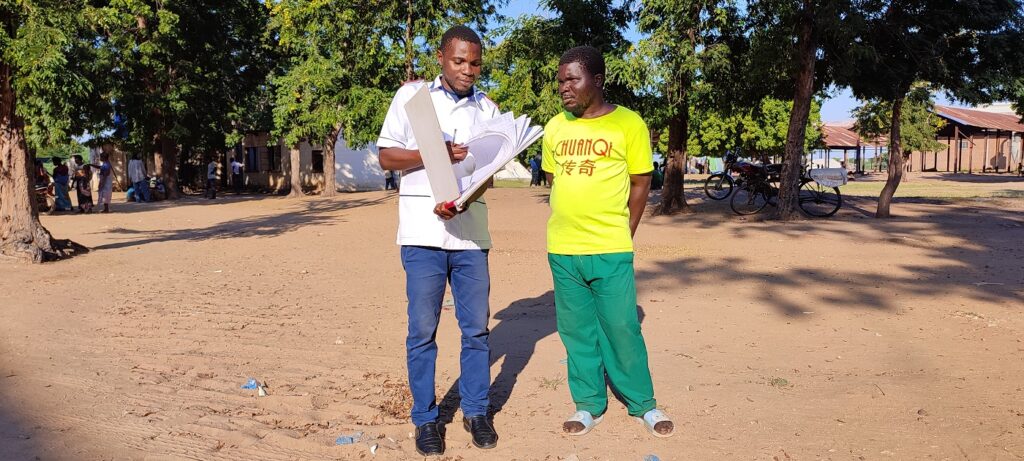
Rodgers Chilemba, FPAM nurse in Nsanje, indicated that apart from family planning services, FPAM is also able to provide general counseling and general medical prescriptions including treatment of Malaria and provision of delivery kits to pregnant women as a way of promoting safe birth and reduce infections to the newborn.
“The camp has been decommissioned and everyone is waiting for allocated resources from government partners and the District Council office to help them restart a life at home,” said Stella Davie, chairlady for Bangula ADMARC camp in TA Mulolo in Nsanje. She added that “Girls freely accessed contraceptive services and they have really avoided unintended pregnancies and sexually transmitted infections.”

“We are thankful because the outreach service providers also reach out to girls and boys with SRH services and we access condoms, injectables, and implant contraceptives with ease,” Maria Bito 17, and Marita Stanfon 16 explained. Bito and Stanford who all got three-year family planning implants added that they only fear if the HIV testing and treatment, STI screening and treatment, and provision of contraceptive services would be stopped as the camp is being decommissioned. “We are very much protected from unplanned pregnancies and sexually transmitted infections through mobile clinic services,” they added.
In Phalombe at Naliya camp from TA Nkhulambe, Mary Moses 39, and Rose Lucius, 42 accessed Cervical Cancer screening services through FPAM mobile clinics apart from other SRHR services that were made available. “I was advised to screen for cervical cancer every twelve months because I’m HIV positive. Through mobile clinics, it is so affordable to have the clinic visit us more importantly because the services are for free and that the nearest health facility here is a private mission hospital where we walk for 4 hours to access a health service,” Moses said.
“I have taught many women and referred 5 of them who also accessed cervical cancer services at FPAM mobile clinic. I have dispelled many myths and misconceptions women hold about the process of screening for cervical cancer and many women in the camp learned a lot from my testimony,” explained Lucius.
Out of all sexual reproductive health and rights services and general medical services FPAM provided in Nsanje and Phalombe districts, family planning services were highly demanded at 58%. Over 1953 people accessed the health services for the period of April and May 2022.
Nsanje and Phalombe districts largely depend on agriculture with a bolstering animal farming culture. The loss of livestock and farm produce has negatively affected people who plan how to resettle in their home areas. Fears for cyclone Anna devastation repeat are also higher.
FPAM received Funding from International Planned Parenthood Federation (IPPF) under the humanitarian grant to respond to Cyclone Ana effects in some of the districts in Malawi. FPAM has managed to take the response in three districts of Nsanje, Chikwawa, and Phalombe. FPAM is working closely with Ministry of Health district structures and staff to provide the following interventions in the camps and displaced communities: integrated SRHR services, HIV testing and treatment, STI screening and treatment, Cervical Cancer screening, Gender-based violence management, general medical care, Post Abortion Care, Immunization, Nutrition, WASH and Psychosocial support. FPAM is also supporting the districts with resources to conduct cluster meetings. In so doing we hope to minimize the health effects of the disaster on the population and assist them to settle back into their community without exposing them more to health-related stress.